Stritch School of Medicine Advisor Program
Faculty Development Training Module
Stritch School of Medicine Advisor Program
Faculty Development Training Module
Welcome to the faculty training module for Stritch School of Medicine's
comprehensive Advisor Program.
This training module is designed to provide you with the necessary information to
function in your critical role advising students throughout their medical education
at Stritch.
Completion of this module and a working knowledge of its content is a requirement
for participation in the Advisor Program.
Advising within PCM
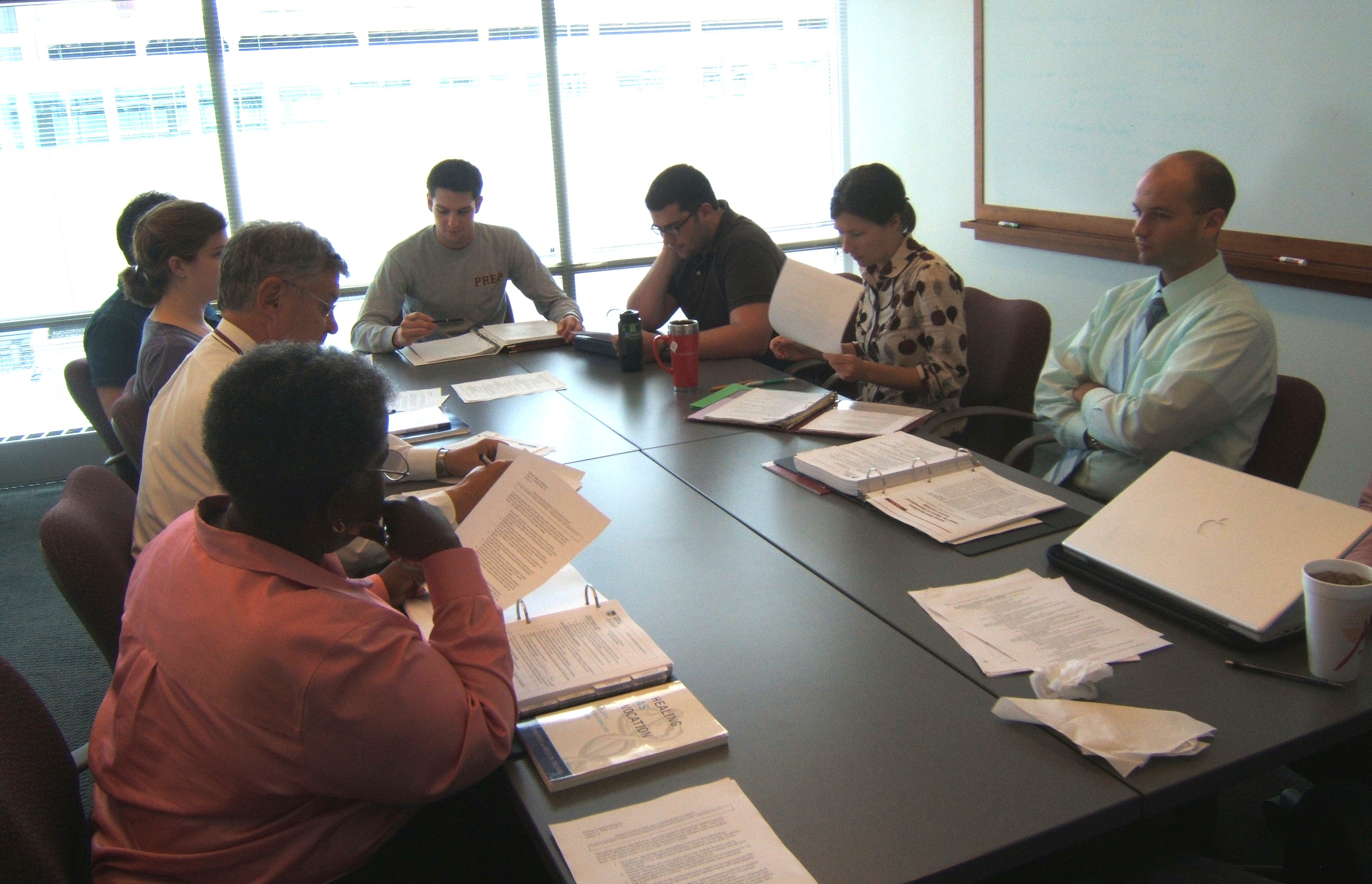
Academic Advising at Stritch School of Medicine operates within the curriculum and small group format
of the Patient Centered Medicine Course.
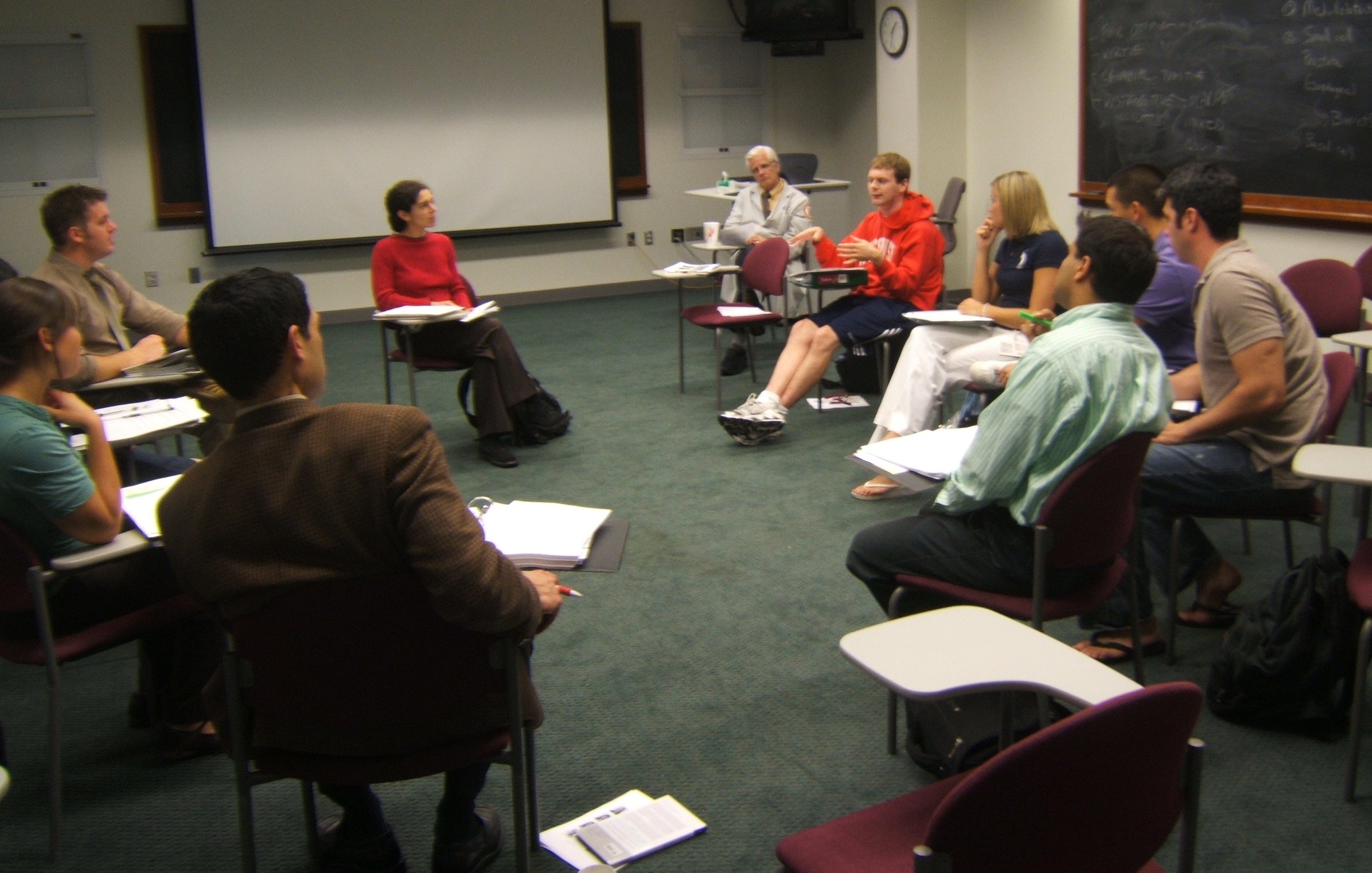
PCM I and III small group facilitators are, de facto, advisors to their small group members.
This system allows for ongoing, regularly scheduled interaction between student
and faculty who, as their advisors, are responsible for overseeing a student's:
- academic performance and progress,
- personal maturation and development,
- professional formation and career discernment.
This unique system allows for designated small group sessions within the PCM curriculum that can focus on
aspects of academic performance, career counseling, and personal development.
Structure of the System
We are in the process of trying to get all those faculty members who facilitate a PCM I small group to facilitate a PCM III small group.
This would allow students to have their same advisors for all four years.
Since there is not yet full participation in both by all, the system operates as designated in the scheme below.
|
PCM I Facilitators are Advisors for: |
PCM III Facilitators are Advisors for: |
|
Year I Students |
Year II Students |
Year III Students |
Year IV Students |
NOTE:
Year II students can meet as needed with their PCM I Advisor
Year IV students meet with their PCM III Advisor
PCM II has small group facilitators but they do not assume the role of advisor to their students. Year II students are advised by their PCM I advisors.
Merits of the System
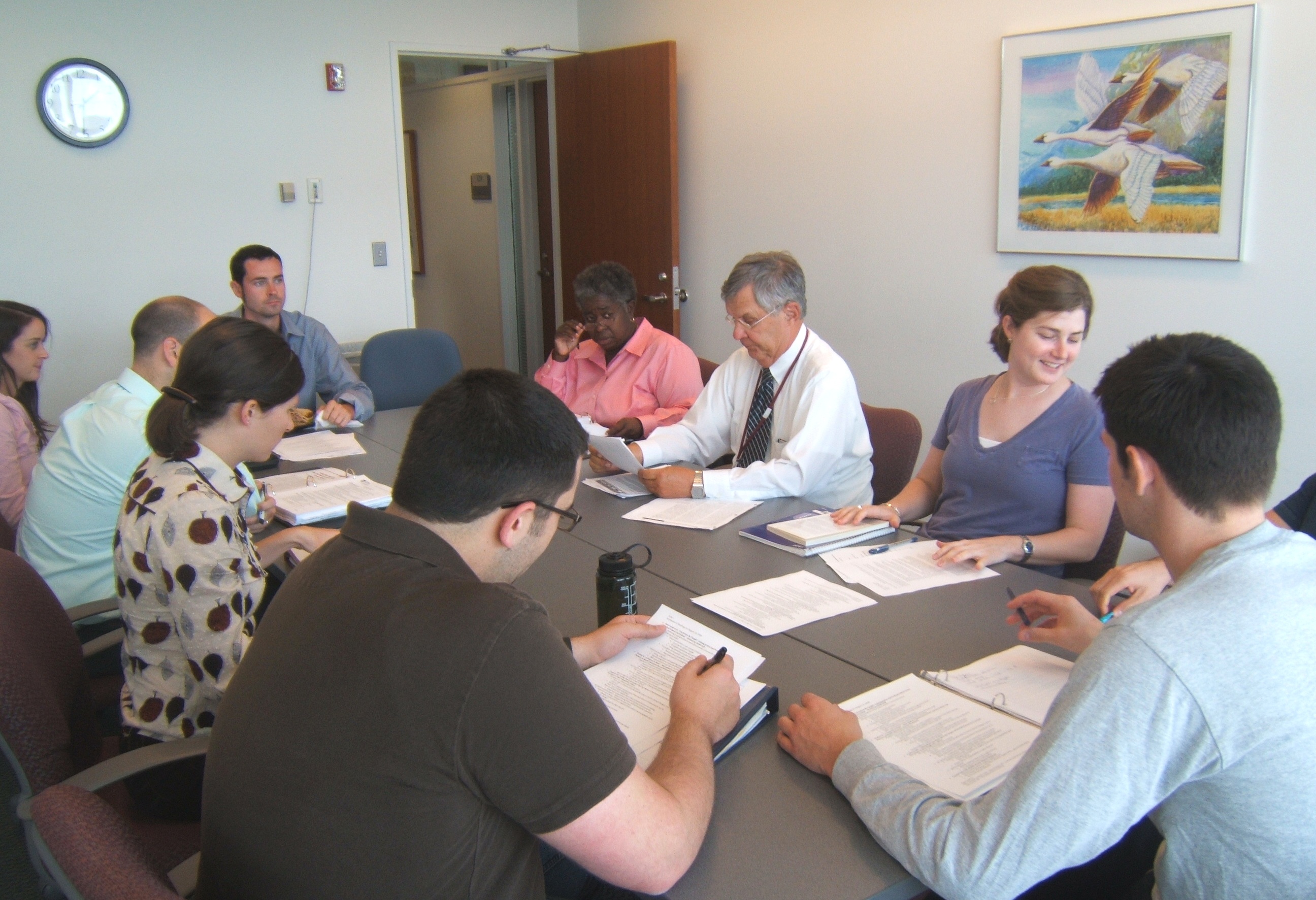
Incorporating Advising within the facilitated small-group structure of PCM offers numerous advantages:
The Challenges
Perhaps the greatest challenge to any advising system is assuring the uniform quality of faculty in their advising expertise,
as well as their consistent performance over four years of student engagement.
Medical education is a high stakes endeavor!
Guiding students through the process means advisors have to be knowledgeable, available, and agile in their ability to
successfully interact with students and respond to their academic, personal and professional concerns.
For this reason, this educational module has been created; to assure that faculty have the requisite knowledge and strategies
for effectively guiding their advisees.
A student deserves no less than this from their advisor.
BACKGROUND
In recent years Stritch has provided its students with a plethora of mentorship experiences!
While these experiences have proven beneficial to the students, they have led to confusion among the students as to "who their
real Advisor is?"
This situation is compounded by the students' desire (early on) and their need (later on) to relate to clinicians within the specialty
they eventually hope to train in.
We have resisted students' pleas in Years' I and II to assign them an advisor within their specialty interest. Why?
First, because the majority of students have no inkling what they will apply for in Year IV.
Second, because we believe that a student's academic advisor should not be the same person who serves as a Specialty Resource
Advocate.
A student's academic advisor and career counselor needs to be someone they are comfortable sharing their shortcomings as well as
their successes with, for the sake of their necessary growth and development.
Hence, the strategy Stritch has pursued, is to designate student's PCM small group facilitator(s) as their academic advisor, their career
guide, and a go-to person should they need personal care or advice.
(N.B. Deans Wronski and Mendez should be seen as the official resource for addressing critical student concerns).
Having established this structure we recognize that we now need to complete our system by doing a better job of channeling students
to expert faculty at Stritch who can serve as their Specialty Resource Advocate within the specialties that a student may choose to apply for.
This person's role is to provide necessary information, serve as a reference person, and guide a student through the application process
within their chosen specialty.
Topics to be Covered
In this module we will succinctly address the following topics which cover the spectrum of students' academic, career, and maturational concerns
encountered in the course of their Four Year education.
|
I. |
Academic Advising |
What and How? |
|
II. |
Career Counseling |
Exploring the Specialties, Deciding on a Specialty, Navigating the Match |
|
III. |
Cura Personalis |
Care for the Whole Person, Creating the Proper Formative Environment |
|
IV. |
Academic Oversight |
Responding to Students' Challenges, Building Upon Their Strengths |
|
V. |
Boards, Boards, Boards... |
When and How |
|
VI. |
Timelines & Deadlines |
What You and the Students Need to Know |
|
VII. |
Fourth Year Schedule |
Getting the Most out of the Final Year |
|
VIII. |
Putting the Pieces Together |
Self Assessment Quiz |
Academic Advising - What and How?
Your role as an advisor includes oversight of your advisees' academic performance.
Hopefully you do not serve in any position that will require you to assign final grades
or competency evaluations on your students except what is required from you in PCM.
Advisors must be free from the conflict that derives when they are also involved with
performance reporting on students.
The following are the working precepts and procedures for Academic Advising:

Career Counseling -
Self Understanding, Career Exploration, Specialty Selection, Navigating the Match
Career decision-making is a process that, ideally, spans all four years of a medical student's experience.
It takes advantage of a student's growing self-understanding, moves through exploration of the many specialties
that can be chosen by a student, and completes itself in the process of final discernment where the individual seeks
to align his or her interests and desires with their talents, abilities, skills, values and relationships. The final process
is securing a graduate training position through the Match Program.
|
Self Understanding |
Specialty Exploration |
Specialty Selection |
Matching in A Specialty |
Exercises that focus the student on these various stages will be designed into the small group activities in PCM.
Your role as advisor is to facilitate these activities and to help the student to interpret them within their experience at Stritch.
Students are naturally inclined to explore their options by getting involved with interest groups, attending specialty panels,
and shadowing faculty in the specialties.
You will listen to the evolving specialty discernment discussions of each of your students in PCM small group sessions.
Your role is to feedback to them what you are hearing in that discernment, and to make yourself available for general questions
about choosing a specialty.
You should be clear to the students about the distinction between your being their Advisor, and their need (in years III, and IV) to
also connect with a member of the faculty in the specialty they are considering who can serve as a Specialty Resource Person and Advocate.

Cura Personalis -
Caring for the Whole Person; Creating a Trusting Formative Relationship
As you build a trusting relationship with your advisees, they will grow in their willingness to share areas of
concern in the personal lives.
While you are not expected to function as formal counselors or therapists (Student Health officially provides
this service for students),
students may choose to discuss with you concerns they have or struggles they may be facing.
In the tables below are listed the common concerns for which students most frequently seek counseling.
|
|
|
|
|
|
In addition students may experience difficulties related to:
|
|
|
|
|
What Should I Do With Someone Who Appears Troubled?
Confidentiality
Students are most likely to confide in someone they feel confident they can trust, not only for helpful advice, but to maintain the confidentiality
of sensitive personal information that is shared.
There will be times when the concerns that a student has shared with you may warrant further discussion, support or intervention.
In those instances you should explain your concerns to the student and obtain permission from the student to discuss these concerns with
another member of the administration.
If you have any questions about the proper handling of sensitive information you should contact the Office of the Dean of Student Affairs.
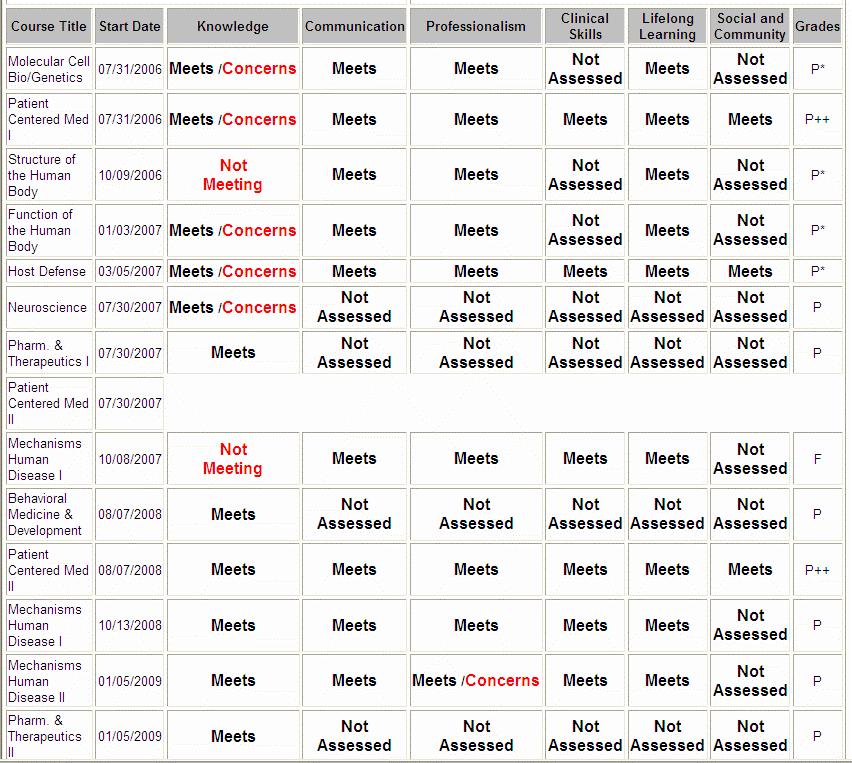
Academic Oversight, Competency Evaluation, Student Progress
Your role in advising students is one piece of a multifaceted system of academic oversight at Stritch involving:
Student Affairs
Educational Affairs
Teaching and Learning Center
Competency Council
Student Progress Committee
The Offices of Student Affairs, Educational Affairs, and The Teaching & Learning Center are responsible for supporting
the academic success of all Stritch students.
Performance data (i.e., exam scores, clerkship reports, competency evaluations) are monitored at several levels within the system.
The goal is to maximize student performance -- whether by responding in a timely fashion when a student is struggling, or
by encouraging the successful student to reach greater levels of excellence.
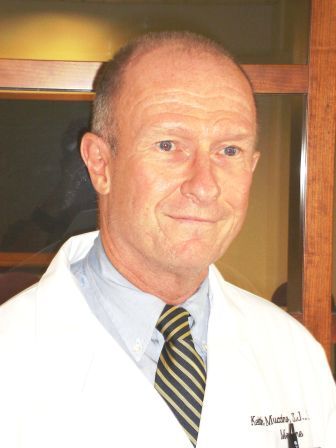
The Competency Council (Dr. Muccino, Chair) is responsible for developing, monitoring and calibrating the school's assessment instruments
to evaluate student performance with respect to the competencies. The committee meets monthly to review performance reports where
students have been cited for any competency deficiencies. Students who demonstrate significant deficiencies are referred to the Student Progress
Committee (see below).
The Student Progress Committee (Dr. Sigman, Chair) at the Stritch School of Medicine is responsible for overseeing and
enacting the school's policies regarding the academic standing of students and their progress toward graduation.
The committee meets monthly or on an ad hoc basis when urgent matters arise.
The committee reviews, amends and updates the policies regarding academic standing and progress
The committee reviews the performance records of any and all students referred to them by the Competency Council.
The committee acts with regard to:
(1) The promotion, placing on leave, or dismissal of individual students for academic reasons
(2) The determination of whether a student has fully satisfied the requirements for the medical degree
(3) The determination of program(s) of remediation necessary for a student to regain academic
standing and resume progress toward graduation.

Boards, Boards, Boards...
USMLE Step I
USMLE Step II Scheduling - Residency Considerations
USMLE Step II CK & CS Timing
*************************************************************************
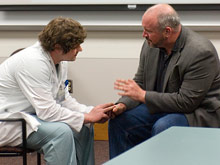
Counseling a Student who has Failed Boards
Counseling a Student who has underperformed on Boards


Important Timelines & Deadlines
Year I
ISI Application Sem I
Summer Research Program Sem I, II
Year II
Step I (June)
Third Year Track Lottery (Feb/Mar)
Year III
Fourth Year Track Lottery (March)
Year IV
Step II CK
Step II CS
ERAS Entry
Interviewing
Rank Order Listing
**********************************
CURRICULUM VITAE PREPARATION
CV In semester 3, prepare and submit to Student Affairs first draft of CV; critiquing will be provided.
In semester 5, update CV (needed for awards); critiquing will be provided.
At the end of semester 6, update CV (needed for awards, electives, LoR letter writers, ERAS application etc.).
**********************************
STEP I Stepping Up to Step I (Presentation given by Student Affairs)
USMLE [Board Steps I, II, III]
STEP II Students should take USMLE Step 2 CK and CS by January to have results available to residencies
who wish that data before ranking you for residency placement.
**********************************
M4 Schedule
Electives-SSOM
Electives Away
VSAS The Visiting Student Application Service (VSAS) is an AAMC application designed to make it easier for medical students
to apply for senior electives at U.S. medical schools and teaching hospitals. For detailed information and resources,
please visit their VSAS website at http://services.aamc.org/20/vsas/.
**********************************
MSPE Students will write unique characteristics paragraph for MSPE (Dean's Letter).
LoR Students should secure letters of recommendation for residency application process.
ERAS Submit the Electronic Residency Application Service (ERAS) application
(system opens July 1 for students and September 1 for residency programs).
NRMP The National Resident Matching Program (NRMP) provides a uniform date of
appointment to positions in graduate medical education (GME) in the United States.
For more information, visit their website at http://www.nrmp.org/.
Applicant registration begins August 15, 2010.
Interviews Interviews occur late October through early February, depending on specialty.
Primary care and military interview earlier; highly competitive fields and surgical
areas may start interviewing later – but selection for interviewing may occur in
Sept/Oct even if interviews are later in the season.
RANK January/Feb submit residency rank order list to NRMP.
MATCH March: Match results arrive.
**********************************
GRADUATION Graduation is typically first week in June.
Residencies typically start as early as second Monday in June, more often third Monday in June.
**********************************
Timeline: USMLE Step 1 Preparation 2010-2011
|
September |
Dean Wronski and Dean Mendez, Student Affairs
|
|
October |
The Next Step in USMLE Prep Dr. Michelfelder and Beth Sonntag
Thursday, October 14, 11:30-1:00, Year 2 Faculty
Beth Sonntag, TLC workshop
|
|
November |
Thursday, November 4, 11:30-1:00, Year 2 Faculty
Monday, November 29, 10:30-12:00, Year 2 Faculty
|
|
January |
Friday, January 7, 11-12:30, Year 2 Faculty
Beth Sonntag, TLC workshops
|
|
February |
Thursday, February 3, 11:30-1:00, Year 2 Faculty
Beth Sonntag, TLC workshops
|
|
March |
Wednesday, March 9, 10:30-12:00, Year 2 Faculty
|
|
April |
Friday, April 1, 10:30-12:00, Year 2 Faculty
Beth Sonntag, TLC workshops
|
|
May
|
May 9, 10, 11
|
|
June / July
|
|

Scheduling the Fourth Year
Your student advisees may seek your assistance in planning their 4th Year Schedule.
This is an important moment in their medical education for it involves completing their educational requirements,
making their final choice of a specialty, and pursuing a residency position in that specialty via the Match Program.
Students in their Fourth Year must complete their education by taking several required Core Clerkships (see below),
as well as electives that can help them finalize their choice of a specialty and give depth to their clinical training .
|
Fourth Year Requirements: |
Core Clerkships (Sub-I Wards, Sub-I ICU) -- 8 Weeks |
|
|
Elective Clerkships (34 weeks; 26 required, 8 discretionary) |
|
|
Bioethics Requirement (Ethics Case Paper, Grand Rounds-4 sessions) |
|
|
USMLE Step 2 CK and CS |
When discussing a student's Fourth Year proposal you should make sure that they have considered the recommendations listed below.

Putting the Pieces Together
Seeing if You Get It...
Now that you have made your way through the content of this module, let's see how well you have grasped the various
expectations for you in your role as an Advisor at SSOM.
Please respond to all of the following questions to gauge your comprehension of the material presented in this module.
(Be sure you scroll down to all 10 of the questions below!)
Congratulations!
You have completed the Advisor Program Faculty Development Module
It is suggested that you use this module as a resource for your work with students